

Below you will find answers to the questions most frequently asked by speakers at previous editions of the conference. If you cannot find the information you are looking for, please feel free to contact us.

Brett Bernard
Brett Bernard is a nationally recognized keynote speaker, author, and transformational coach who helps students, educators, athletes, and corporate teams unlock hidden potential and unleash elite performance. Growing up with ADHD and a learning disability, Brett rewrote his story—rising from struggling student to World Champion Unicyclist and award-winning teacher. With 25+ years of experience, Brett combines storytelling, unicycle demonstrations, and strategies from Maximize Your One™ to inspire growth.
Brett Bernard
PanelPicker - Enter Your Idea | SXSW EDU Conference & Festival
Brett Bernard is a nationally recognized keynote speaker, author, and transformational coach who helps students, educators, athletes, and corporate teams unlock hidden potential and unleash elite performance. Growing up with ADHD and a learning disability, Brett rewrote his story—rising from struggling student to World Champion Unicyclist and award-winning teacher. With 25+ years of experience, Brett…
Danijela Vranješ
Danijela Vranješ is a teaching assistant at the Department of German Studies and the Digitalisation and Artificial Intelligence Coordinator at the Faculty of Philology, University of Belgrade. Her primary area of teaching is German as a foreign language. Her research focuses on the application of artificial intelligence in primary, secondary, and higher education. She has delivered numerous workshops and seminars on this topic for primary and secondary school teachers and students, as well as university lecturers and students.
Danijela Vranješ
Rules, Rules… On the (Im)possibility of Regulating the Use of AI in Education
Danijela Vranješ is a teaching assistant at the Department of German Studies and the Digitalisation and Artificial Intelligence Coordinator at the Faculty of Philology, University of Belgrade. Her primary area of teaching is German as a foreign language. Her research focuses on the application of artificial intelligence in primary, secondary, and higher education. She has…
Eva Ulbrich
Eva Ulbrich is an educational scientist specialising in STEAM education, digital fabrication, and teacher education. Before delving into education, she worked in the area of Big Data representation and Machine Learning. She received her PhD from Johannes Kepler University Linz in 2026 with a dissertation on the development of the 3D-STEAM framework supporting teacher engagement with 3D modelling and 3D printing (3DMP). Before entering academia, she worked professionally with 3D design and digital fabrication in industry, developing and producing 3D models and prototypes. Her research focuses on integrating digital technologies into inquiry-based STEAM education and supporting teachers in working with complex technologies in the classroom. She has contributed to several European projects that develop experimental learning activities and teacher training programmes in STEAM education.
Eva Ulbrich
From AI-Generated Answers to AI-Supported Thinking: A Tutor for Future Teachers
Eva Ulbrich is an educational scientist specialising in STEAM education, digital fabrication, and teacher education. Before delving into education, she worked in the area of Big Data representation and Machine Learning. She received her PhD from Johannes Kepler University Linz in 2026 with a dissertation on the development of the 3D-STEAM framework supporting teacher engagement…
José M. Cañas
José M. Cañas cofounded the RoboticsLabURJC at Universidad Rey Juan Carlos, where he holds a Full Professor tenured position. His interests include AI driven Robotics and Robotics Education. He leads the non profit JdeRobot organization, which develops open source software on Robotics and AI, and has been selected by Google for GSoC 2017-2026.
José M. Cañas
Unibotics: hands-on robotics learning in Higher Education, programming robots from the web browser
José M. Cañas cofounded the RoboticsLabURJC at Universidad Rey Juan Carlos, where he holds a Full Professor tenured position. His interests include AI driven Robotics and Robotics Education. He leads the non profit JdeRobot organization, which develops open source software on Robotics and AI, and has been selected by Google for GSoC 2017-2026.
Milan Milanović
Milan Milanović is an Assistant Professor of English Language and Applied Linguistics at the University of Doha for Science and Technology (UDST), Qatar. His teaching and research interests include language assessment, AI in education, academic communication, and the pedagogically responsible use of generative AI in higher education.
Milan Milanović
From AI Literacy to Employability: Rethinking Teaching and Assessment for the AI-Enhanced Workplace
Milan Milanović is an Assistant Professor of English Language and Applied Linguistics at the University of Doha for Science and Technology (UDST), Qatar. His teaching and research interests include language assessment, AI in education, academic communication, and the pedagogically responsible use of generative AI in higher education.
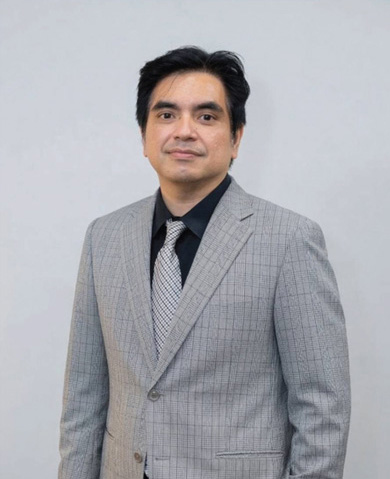
Therdpong Thongseiratch
Assoc. Prof. Therdpong “Ted” Thongseiratch, MD, MSc, is a developmental and behavioral pediatrician and medical educator at the Faculty of Medicine Ramathibodi Hospital, Mahidol University, Thailand. His work focuses on faculty development, AI in health professions education, behavioral science, and educational innovation.
Therdpong Thongseiratch
From AI Literacy to AI-Ready Faculty: Designing Faculty Development for Responsible and Effective AI Integration
Assoc. Prof. Therdpong “Ted” Thongseiratch, MD, MSc, is a developmental and behavioral pediatrician and medical educator at the Faculty of Medicine Ramathibodi Hospital, Mahidol University, Thailand. His work focuses on faculty development, AI in health professions education, behavioral science, and educational innovation.

Uglješa Marjanović
Uglješa Marjanović is a Professor of Industrial Engineering and Management at the University of Novi Sad and currently serves as a Managing Director of Frankfurt School Solutions GmbH branch office Serbia, a subsidiary of the Frankfurt School of Finance and Management.
He has earned his PhD degree in Industrial Engineering at the University of Novi Sad, Serbia, and was a postdoctoral researcher in the School of Mathematics, Computer Science & Engineering at the City University London. Ugljesa held visiting posts at Bloomsburg University, Penn State University, and helped set up the Cisco Entrepreneur Institute at the University of Novi Sad in Serbia.
He has also been an Adviser to the Minister of Innovation at the Government of Serbia. Developed numerous policy recommendations and reports in digital education.
His research, teaching, and advisory activities are at the intersection of strategy, innovation, digital education, and industrial engineering. His preferred research methods are field surveys, interviews, and observations, as well as multivariate statistical analysis.
Uglješa’s research has been published in well-established academic journals, Information and Management, Information Systems and e-Business Management, International Journal of Managing Projects in Business, Advances in Production Engineering and Management. He is an Editor-in-Chief for the International Journal of Industrial Engineering and Management and a full member of IFIP WG5.7.
He led numerous national and international projects and provided several consultancies, such as EC, ETF, JRC, USAID, UNDP, UNICEF, World Bank, Microsoft, ERI SEE, PwC. Ugljesa was also a branch manager at Tangled – a startup offering state-of-the-art AI solutions, as well as a managing director of efiport GmbH branch office Serbia.
Uglješa Marjanović
AI in Teaching and Learning: Results from „EdTech talents“ Project
Uglješa Marjanović is a Professor of Industrial Engineering and Management at the University of Novi Sad and currently serves as a Managing Director of Frankfurt School Solutions GmbH branch office Serbia, a subsidiary of the Frankfurt School of Finance and Management. He has earned his PhD degree in Industrial Engineering at the University of Novi…