

Below you will find answers to the questions most frequently asked by speakers at previous editions of the conference. If you cannot find the information you are looking for, please feel free to contact us.

Tamara Ilić
Tamara Ilić holds a Master’s degree in Early Childhood Education and works as a lead preschool teacher at „Vesna“ Preschool Institution in New Belgrade. Over the past 11 years, she has incorporated a range of digital tools and applications into her work with children while continuously developing her professional skills. She has presented at numerous conferences on the use of digital technologies in early childhood education and participated in the Erasmus+ project Knowledge for the Future in 2018.
Tamara Ilić
Using Web Tools, Applications, Virtual Reality and Artificial Intelligence in the Development of Topics and Projects
Tamara Ilić holds a Master’s degree in Early Childhood Education and works as a lead preschool teacher at „Vesna“ Preschool Institution in New Belgrade. Over the past 11 years, she has incorporated a range of digital tools and applications into her work with children while continuously developing her professional skills. She has presented at numerous…
Tanja Ranković
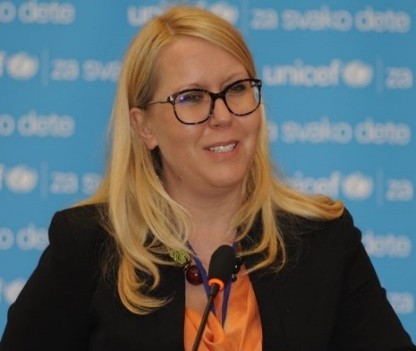
Since 2012, Tanja Rankovic has led UNICEF Serbia’s education programme and has been behind numerous systemic initiatives aimed at improving the quality and equity of education for all children. Under her leadership, UNICEF in Serbia has launched key initiatives in early childhood education, inclusive and equitable learning, quality improvement, digitalization, violence- and discrimination-prevention, as well as efforts to reduce school dropout. Her extensive experience includes developing and coordinating strategic initiatives and partnerships with government institutions, academic organizations, civil society, and international partners. Tanja has also initiated and guided numerous research studies that have helped shape modern and effective education policies and inform evidence-based solutions across the system.
From 2022 to 2024, she developed and led UNICEF’s education, early childhood development, and adolescent programme in Slovakia.
Previously, from 2006 to 2012, she served as Deputy Manager and Coordinator for Education and Human Capital Development in the Social Inclusion and Poverty Reduction Unit of the Government of Serbia/Office of the Deputy Prime Minister. In these roles, she oversaw the development, coordination, monitoring, and implementation of education policies within the social inclusion and poverty reduction agenda, and contributed to national strategic documents and major reform initiatives.
Between 1999 and 2006, she worked in the NGO sector in Serbia, Greece and North Macedonia.
She holds a master’s degree in education policy and advanced her professional expertise through the Equity, Quality and Leadership program at the Harvard Graduate School of Education.
Tanja Ranković
From Digital Tools to Transforming Learning: How EdTech Can Improve the Quality, Inclusiveness and Relevance of Education
Since 2012, Tanja Rankovic has led UNICEF Serbia’s education programme and has been behind numerous systemic initiatives aimed at improving the quality and equity of education for all children. Under her leadership, UNICEF in Serbia has launched key initiatives in early childhood education, inclusive and equitable learning, quality improvement, digitalization, violence- and discrimination-prevention, as well…
Therdpong Thongseiratch
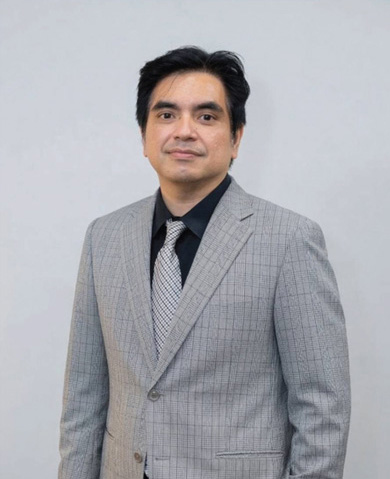
Assoc. Prof. Therdpong “Ted” Thongseiratch, MD, MSc, is a developmental and behavioral pediatrician and medical educator at the Faculty of Medicine Ramathibodi Hospital, Mahidol University, Thailand. His work focuses on faculty development, AI in health professions education, behavioral science, and educational innovation.
Therdpong Thongseiratch
From AI Literacy to AI-Ready Faculty: Designing Faculty Development for Responsible and Effective AI Integration
Assoc. Prof. Therdpong “Ted” Thongseiratch, MD, MSc, is a developmental and behavioral pediatrician and medical educator at the Faculty of Medicine Ramathibodi Hospital, Mahidol University, Thailand. His work focuses on faculty development, AI in health professions education, behavioral science, and educational innovation.

Tijana Radisavljević
Tijana Radisavljević is an English language teacher who graduated from the Faculty of Philology at the University of Belgrade and has extensive experience in primary and secondary education. Her work focuses particularly on the individualisation of teaching and the use of digital and assistive technologies to support students with additional educational needs. She explores both the potential and the limitations of artificial intelligence in lesson planning and adapting teaching to students’ individual needs. She actively participates in Erasmus+ projects and international cooperation, exchanging experiences and exploring innovative educational practices. She is also a certified scientific and technical translator and a court-certified interpreter for English.
Tijana Radisavljević
Teachers’ AI Literacy in Inclusive Education: Why AI Won’t Replace Us (After All)
Tijana Radisavljević is an English language teacher who graduated from the Faculty of Philology at the University of Belgrade and has extensive experience in primary and secondary education. Her work focuses particularly on the individualisation of teaching and the use of digital and assistive technologies to support students with additional educational needs. She explores both…