

Below you will find answers to the questions most frequently asked by speakers at previous editions of the conference. If you cannot find the information you are looking for, please feel free to contact us.
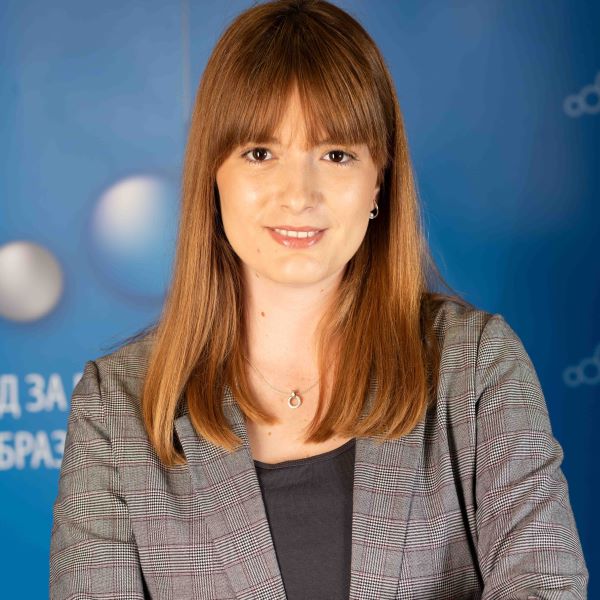
Katarina Baljak
Katarina Baljak works at the Centre for Educational Technology within the Institute for the Evaluation of the Quality of Education. She is involved in national and international research, providing expert support in the use of digital platforms and tools. She contributes to the development of reports, manuals, and guidelines for educational institutions. Through collaboration with expert teams, she helps strengthen schools’ digital capacities and promote the effective integration of modern technologies into educational practice.
Katarina Baljak
Digital World: The Task as a Bridge Between Learning Outcomes and Competences
Katarina Baljak works at the Centre for Educational Technology within the Institute for the Evaluation of the Quality of Education. She is involved in national and international research, providing expert support in the use of digital platforms and tools. She contributes to the development of reports, manuals, and guidelines for educational institutions. Through collaboration with…
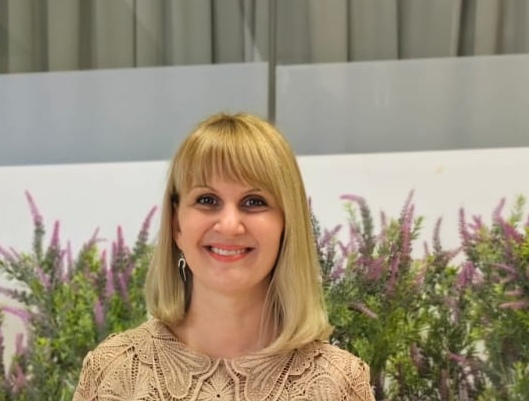
Katarina Kotrla Vidić
Katarina Kotrla Vidić has been a mathematics and computer science teacher since 2006, when she graduated in Mathematics and Computer Science from Josip Juraj Strossmayer University of Osijek. She has been teaching both subjects since 2007 and is actively involved in a wide range of educational activities within her school and the wider community. In 2025, she was promoted to the title of Excellent Adviser in the subject of Computer Science.
She takes a practical and inclusive approach to teaching, combining clear explanations, visual materials, and interactive tasks to make learning accessible to all students. Her teaching incorporates a variety of web-based tools, educational digital games, and applications. She also fosters interactive and collaborative relationships with her students, enabling her to monitor their progress continuously. She regularly shares her knowledge and experience with colleagues and the wider community.
The Ministry of Science and Education has recognised her contributions to improving the quality of the education system and her outstanding commitment to ensuring high-quality education with awards presented on Teachers’ Day on four occasions: in the 2019/2020, 2022/2023, 2023/2024, and 2024/2025 school years. She is a wife and mother to a daughter.
Katarina Kotrla Vidić
Using Artificial Intelligence to Support Inclusive STEM Education
Katarina Kotrla Vidić has been a mathematics and computer science teacher since 2006, when she graduated in Mathematics and Computer Science from Josip Juraj Strossmayer University of Osijek. She has been teaching both subjects since 2007 and is actively involved in a wide range of educational activities within her school and the wider community. In…

Kristina Drini
Kristina is an education specialist at CIP – Centre for Interactive Pedagogy. Her work has focused on the inclusion of children from vulnerable groups in the education system, as well as on collaborating with and supporting parents and staff in educational institutions, including in the use of digital tools. She delivers accredited training programmes, develops professional development programmes and guides, and is a member of the Serbian Pedagogical Society.
Kristina Drini
Digital Bridges to Higher-Quality and More Inclusive Education
Kristina is an education specialist at CIP – Centre for Interactive Pedagogy. Her work has focused on the inclusion of children from vulnerable groups in the education system, as well as on collaborating with and supporting parents and staff in educational institutions, including in the use of digital tools. She delivers accredited training programmes, develops…